Bioproducts are rapidly taking on a decisive role in mitigating climate change and advancing the green transition. By replacing fossil-based raw materials with renewable and domestic alternatives, they help reduce emissions and strengthen regional economies. Suomussalmi stands out as one of Finland’s most promising locations for bioproduct development and investment — a place where the conditions for bioproduction are truly exceptional.
A Strategic Location with Abundant Forest Resources
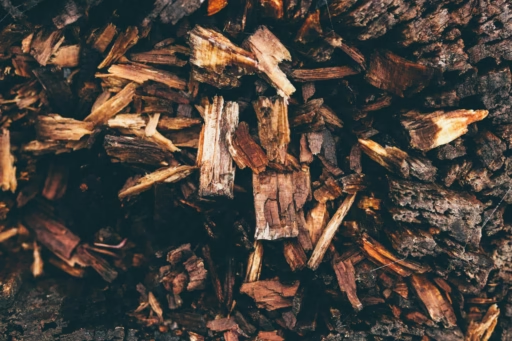
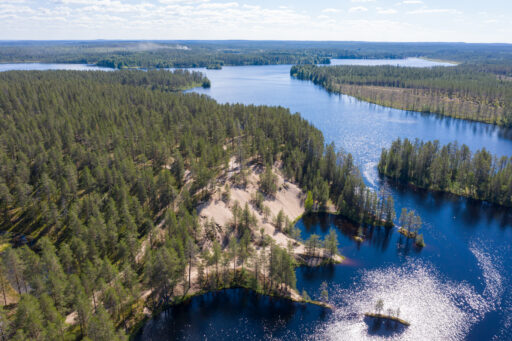
Suomussalmi lies at the heart of vast forest reserves, much of whose biomass potential remains underutilized. The region generates large volumes of wood-processing by-products such as bark, chips, sawdust, and logging residues — valuable raw materials for bioproduct manufacturing. These feedstocks form a natural competitive advantage few other regions can match.
From a logistical standpoint, Suomussalmi is also exceptionally well-positioned: the area offers railway connections, a reliable road network, and a dedicated timber terminal, ensuring cost-efficient transport of raw materials.
“If you draw a 100-kilometer circle around Suomussalmi, the forest resources are immense and transport distances for raw materials are optimal,” says Mikko Ahokas from Macon Oy. “On top of that, the rail links and power grid are in excellent shape.”
Expanding Opportunities in the Bioeconomy
The opportunities for bioproduction are broad and growing. Wood can be refined into a wide range of high-value products — from biochar and biofuels to biochemicals and bioplastics. One particularly promising compound is lignin, a natural component of wood that binds fibers together and provides structural strength.
Lignin can be used to produce adhesives, resins, and binders that replace fossil-based chemicals such as phenol and formaldehyde. Lignin-derived materials also have potential applications in the automotive, construction, and even electronics industries.
Technological innovation is making bioproduction more attractive than ever. New processes based on ionic liquids enable the separation of lignin, cellulose, and hemicellulose without harsh chemicals or high temperatures — reducing environmental impact and improving cost efficiency.
A Solid Foundation for Industrial Investment
According to Ahokas, economic feasibility studies in Suomussalmi have already yielded encouraging results.
“Our calculations show that bioproduct processes could be profitable even at a relatively small scale — for example, through a pilot plant that can later be expanded,” he explains.
The industrial zone in Suomussalmi is already equipped with municipal infrastructure, electricity and heating networks, and plots ideally suited for bio-based processing — all without major additional investments. The municipality and the wider Kainuu region maintain a positive, proactive attitude toward new bioindustry projects. Collaboration between business and research institutions is strong and open, making Suomussalmi ready — in terms of resources, infrastructure, and mindset — to welcome new bioproduction investments.
A Strategic Investment in a Sustainable Future
Investing in bioproducts is more than an environmental act — it is a strategic investment in the future of the economy, energy security, and regional self-sufficiency. The bioproduct industry creates new jobs, attracts expertise, and brings in investors.
“When raw materials, logistics, and know-how are in place, we can build an industrial symbiosis where companies benefit from each other’s side streams — one produces lignin, another cellulose, and a third creates bio-based end products from them,” says Ahokas.
Both the municipality of Suomussalmi and the Kainuu region actively support bioeconomy initiatives.
“The municipality is open to new ideas and ready to assist with site selection, infrastructure, and permitting. There’s a clear ambition to grow through bio-based projects,” Ahokas emphasizes.
A Model Region for Future Bioproducts
The significance of bioproducts will only continue to grow. Solutions that replace fossil materials are essential, and Finland’s clean, renewable raw materials offer a global competitive edge. With its abundant forests, ready industrial facilities, solid infrastructure, and skilled workforce, Suomussalmi has everything needed to become a model region for sustainable bioproduct manufacturing.
“If these ambitious plans are realized, Suomussalmi could, within just a few years, be the place where the bioproducts of the future are made — sustainably, from domestic raw materials, and for the world,” concludes Mikko Ahokas.